
RESERVATION IN NEET (NATIONAL ELIGIBILITY CUM ENTRANCE TEST): IMPACT OF SOCIO-ECONOMIC RESERVATION POLICIES ON NEET PERFORMANCE AND ACCESS
Corresponding Author
Aaryan Sharma
Email : : a9179899985@gmail.comABSTRACT
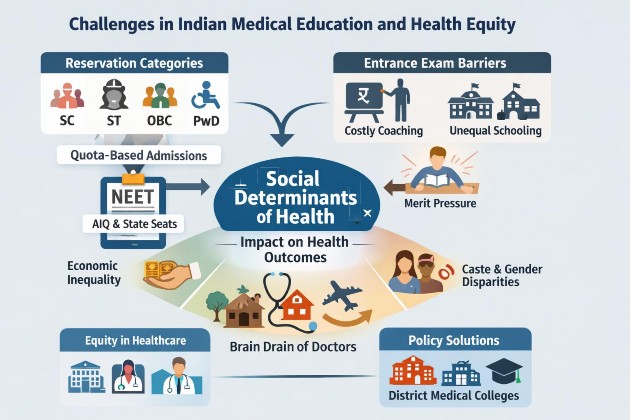
The Indian medical education system faces complex challenges arising from social inequities, reservation policies, and merit-based entrance examinations. The National Eligibility cum Entrance Test (NEET) serves as a standardized gateway for medical admissions; however, its implementation has highlighted disparities in access and outcomes. Reserved categories, including Scheduled Castes (SC), Scheduled Tribes (ST), Other Backward Classes (OBC), Economically Weaker Sections (EWS), and Persons with Disabilities (PwD), benefit from affirmative action policies, providing quota-based opportunities in both state and All India Quota (AIQ) seats. Despite these provisions, students from disadvantaged socio- economic backgrounds often face barriers due to unequal schooling, limited access to coaching, and high competition, which impacts their medical career progression. Social determinants of health (SDH), encompassing conditions in which individuals are born, grow, live, and work, significantly influence both the distribution of healthcare professionals and health outcomes. Studies indicate that SDH can contribute to over half of health outcomes, underscoring the need for inclusive policies in medical education. Affirmative action programs, modeled globally and in India, aim to improve social representativeness among healthcare professionals, particularly physicians. Furthermore, geographical disparities in medical college distribution exacerbate healthcare inequities, with rural, tribal, and remote areas underserved. Policy interventions, including district-level medical colleges and NEET reforms, seek to mitigate these gaps while maintaining minimum competency standards. Understanding the intersection of reservation policies, SDH, and medical education is essential for creating equitable and effective healthcare delivery systems in India.
Keywords: NEET; Reservation Policy; Social Determinants of Health; Medical Education; Affirmative Action.
GRAPHICAL ABSTRACT
INTRODUCTION
The NEET UG admission process is significantly shaped by India’s reservation system. Although your score remains a key factor, your category also plays a major role in determining cutoff marks, competition intensity, and the counseling process. Many students overlook this aspect, which often leads to confusion, stress, and unrealistic expectations. Understanding how reservation policies influence seat allocation and ranking can make the process much smoother. It helps you identify which colleges are realistically within reach, minimizes unnecessary anxiety during counseling, and provides clarity on how different quotas may benefit you. With a better grasp of how categories, ranks, and seat distribution are connected, candidates can navigate NEET admissions with greater confidence and fewer unexpected challenges.
This study presents a focused case-based analysis of NEET reservation policies in India by examining category-wise seat distribution, cutoff variations, and access disparities. The case context is defined at the national level, where NEET serves as a centralized admission system, allowing for an integrated examination of policy implementation and its outcomes across different socio-economic groups.
Theoretical Framework
This study is grounded in social justice theory, which emphasizes equitable access to opportunities and resources across different socio-economic groups. Reservation policies in NEET are examined as institutional mechanisms designed to address structural inequalities in education. Additionally, the study draws on the concept of social determinants of health (SDH), which highlights how socio-economic conditions influence both educational outcomes and access to professional opportunities. By integrating
these perspectives, the paper provides a conceptual foundation for understanding reservation not as a deviation from merit, but as a corrective measure to ensure fairness and inclusivity in medical education.
METHODOLOGY
This study adopts a qualitative policy analysis approach to examine the impact of socio-economic reservation policies on NEET performance and access to medical education in India. The research is based on secondary data collected from government reports, peer-reviewed journal articles, and official policy documents related to NEET and reservation systems. A thematic analysis technique was employed to identify key patterns related to access inequality, category-based cutoffs, and socio-economic barriers. The study focuses on interpreting existing data and policy frameworks to provide a structured understanding of how reservation influences admission outcomes and equity in medical education.
UNDERSTANDING RESERVATION CATEGORIES IN NEET
NEET admissions are not entirely uniform for all candidates. Under the 15% All India Quota, the reservation structure is as follows:
-
27% for OBC-NCL
-
15% for SC
-
7.5% for ST
-
10% for EWS
-
5% horizontal reservation for PwD across all categories
The remaining 85% of seats come under the State Quota, where reservation policies differ across states. Some states subdivide OBC into smaller groups, while others include additional categories such as SEBC or MBC along with regional quotas. Due to these variations, the number of seats available in each category differs significantly from one state to another.
Your category determines the specific pool of seats you compete in, the number of seats accessible to you, and the applicable cutoff range. This directly affects your admission chances, and understanding this framework helps you estimate realistic options even before counseling begins.
ROLE OF RESERVATION IN NEET SEAT DISTRIBUTION
Medical colleges allocate seats based on reservation categories, effectively creating separate pools of competition. This means that students compete within their respective categories rather than against all candidates, even if their scores are the same.
For example, a college may divide its seats as follows:
-
50 seats for UR
-
27 seats for OBC
-
15 seats for SC
-
8 seats for ST
-
10 seats for EWS
Since each category has its own seat allocation, two candidates with identical scores may have very different chances of admission. A score sufficient in one category might not meet the cutoff in another. This explains the variation in cutoff levels and highlights why understanding your category-specific seat pool is essential for predicting admission outcomes.
EFFECT OF RESERVATION ON NEET CUTOFF RANKS
Reservation policies have a clear influence on cutoff ranks, as each category competes within its own group, leading to variations in ranking patterns.
General (UR)
This category faces the highest competition. High-scoring candidates from all categories are eligible for UR seats, which consistently raises the cutoff. Even a minor drop in marks can significantly impact rank.
EWS Quota
The cutoff for EWS is slightly lower than UR but still competitive. With increasing applicants in this category, the gap between UR and EWS cutoffs has narrowed in many states.
OBC Reservation
OBC-NCL candidates generally benefit from lower cutoffs compared to UR. This reservation improves admission prospects, particularly under the All-India Quota and in states with a high OBC population.
SC and ST Quota
These categories usually have the lowest cutoffs. This is due to fewer competitors and policies designed to ensure representation for historically disadvantaged groups. The difference between SC/ST and UR cutoffs can sometimes be quite large.
Overall, these variations create noticeable differences in closing ranks across categories. Two students with the same score may fall into entirely different rank brackets depending on their reservation category, making it important to understand these trends during counseling.[1]
MYTHS, REALITIES, AND CONCERNS SURROUNDING RESERVATION IN MEDICAL ADMISSIONS
The issue of reservation in medical colleges often becomes a subject of debate, especially when misinformation begins to circulate. During the NEET admission process, several rumours spread widely on social media, increasing anxiety among students from reserved categories. Two major claims gained attention: one suggesting that reservations in private medical colleges in Uttar Pradesh had been removed, and another stating that reserved category candidates would not be allowed to compete under the general category even if they scored higher marks. However, investigations revealed that both claims were unfounded and misleading.
The first rumour originated from a news report that was widely shared without proper verification (Fig 1). As it spread across platforms like Facebook and Twitter, it quickly gained traction and was picked up by various media outlets. This created confusion and unnecessary panic among aspirants. Similarly, another
false claim suggested that NEET had introduced separate merit lists where reserved category candidates would be restricted only to their quota seats, even if their scores qualified them for general category admission. Some media outlets further amplified this misinformation by incorrectly citing judicial decisions.
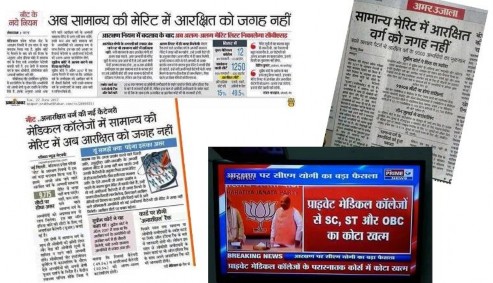
Figure 1: News report that was widely shared without proper verification
Socio-Economic Background → Access to Educational Resources → NEET Performance → Admission Opportunities → Healthcare Representation
This framework illustrates how socio-economic conditions influence access to resources such as quality schooling and coaching, which in turn affect NEET performance. Reservation policies intervene at the admission stage to improve access for disadvantaged groups, ultimately contributing to a more representative healthcare workforce.
“As shown in Figure 1, socio-economic background indirectly shapes admission outcomes through its impact on educational access and examination performance.”
In reality, no such official policy changes had been implemented. Authorities later clarified that no notification had been issued regarding the removal of reservations or restrictions on category mobility in admissions. Despite these clarifications, the rumours continued to circulate, highlighting the powerful role of social media in spreading unverified information.
This situation underscores the importance of relying on authentic sources during critical processes like NEET counseling. Misinformation not only creates confusion but can also negatively affect students’ mental well-being and decision-making. Accurate awareness of reservation policies is essential to ensure that candidates approach the admission process with clarity and confidence rather than fear and misunderstanding.[2]
DEBATING MERIT AND RESERVATION IN NEET ADMISSIONS
The introduction of reservation for OBC and EWS categories under the All-India Quota in NEET once again sparked intense public debate in India. A significant section of society reacted strongly, arguing that such policies undermine merit and fairness in medical admissions. However, these reactions reveal an inconsistency in how the concept of merit is understood and applied. Interestingly, similar levels of opposition were not observed when the EWS quota was introduced, raising questions about selective criticism.
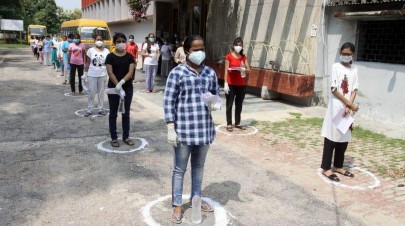
Figure 2: Students gathered outside a NEET examination centre in Lucknow while arriving to take the test on 13 September 2020
The debate often overlooks the fact that merit is not solely determined by examination scores but is also shaped by access to resources, opportunities, and social conditions. Students from disadvantaged backgrounds may not have the same level of support as those from more privileged sections, making reservation a mechanism to promote equal opportunity rather than diminish merit. Additionally, affirmative action policies exist in many developed countries, including the United States, challenging the argument that such measures hinder progress.
Overall, the controversy highlights the need to reassess the traditional notion of merit and to understand reservation as a tool for social balance.[3]
NEET AND THE CHALLENGE OF MERIT-BASED MEDICAL ADMISSIONS IN INDIA
Since NEET became mandatory in 2016, its promise of introducing merit-based entry into medical colleges has faced significant challenges. Despite 60,000 MBBS seats being available in India, over 13 lakh students compete annually, yet an astonishing seven lakh students qualify for admission. This raises questions about how candidates with much lower ranks secure seats while highly meritorious students sometimes miss out.
Analysis of admission data reveals that government-controlled seats in both private and public colleges, which include reservations for SC, ST, and OBC students, generally attract higher NEET scores than management or NRI quota seats in private colleges. For instance, students admitted to government- controlled seats averaged 448 out of 720, while those in high-fee private management or NRI seats averaged only 306. Scheduled Caste students, despite being in reserved quotas, often scored higher than many in the unreserved high-fee category. Similarly, government colleges with lower tuition fees typically have higher average NEET scores compared to more expensive institutions.
The trend highlights that financial capacity, rather than merit, sometimes dictates access to medical education. The shift to a percentile-based system has further allowed students with lower absolute scores to qualify, enabling general category students with comparatively low scores to secure private college seats over higher-scoring reserved-category candidates. Additionally, the lack of subject-wise cutoffs has resulted in students with very poor performance in subjects like Chemistry or Physics still gaining admission.
Overall, the current NEET system has not fully delivered on the merit-based ideal. While it was intended to standardize admissions and reduce corruption, it often allows students with minimal academic ability to enter medical programs, while socially disadvantaged yet high-performing students face obstacles. This exposes the tension between affirmative action and the conventional notion of merit, underscoring the need for a more nuanced approach to medical college admissions in India.[4]
Supreme Court Strikes Down Domicile-Based Reservation in PG Medical Courses
The Supreme Court of India has declared domicile-based reservations in postgraduate (PG) medical admissions unconstitutional, ruling that such policies violate Article 14 of the Constitution, which guarantees equality before the law. This landmark judgment emphasizes that all citizens of India share equal rights to pursue education and professional opportunities across the country, regardless of state of residence.
A three-judge bench, comprising Justices Hrishikesh Roy, Sudhanshu Dhulia, and SVN Bhatti, clarified that state quota seats must now be allocated purely on the basis of merit determined through the National Eligibility cum Entrance Test (NEET) PG examination. The court observed that residency within a particular state cannot justify preferential treatment in educational admissions, as all Indian citizens are equally domiciled within the nation and possess the freedom to live, work, and study anywhere in India. The decision overturns previous domicile-based policies for future PG medical admissions but explicitly preserves the rights of students who had already been admitted under such reservations. This ensures that current students are not unfairly affected while future aspirants will compete for seats based solely on merit, promoting fairness and transparency in the selection process.
The ruling arose from a public interest litigation challenging the Punjab and Haryana High Court’s earlier decision that had deemed domicile-based reservations unconstitutional. NEET PG functions as the single- window entrance examination for admission to MD, MS, PG Diploma, direct six-year DrNB programs, and NBEMS Diploma courses, making this judgment especially significant for standardizing admissions nationwide.
By emphasizing merit over state-based quotas, the Supreme Court’s decision seeks to uphold constitutional equality while discouraging regional discrimination. It underscores the principle that educational opportunities should be accessible to all Indian citizens equally, fostering a competitive and meritocratic environment in medical education.[5]
NEET 2026 RESERVATION POLICY: DETAILED CATEGORY-WISE GUIDELINES FOR SC, ST, OBC, EWS, AND PWD CANDIDATES
The NEET 2026 reservation framework is designed to provide equitable opportunities for students from various social and economic backgrounds in medical admissions. Under the 15% All India Quota (AIQ) seats, 27% of positions are reserved for Other Backward Classes (OBC-NCL), while 10% are allocated to Economically Weaker Section (EWS) candidates. It is essential for applicants to select the correct category during the NEET application process to claim these benefits.
Previously, AIQ seats primarily applied to central universities and national institutions, but over time, reservation policies have broadened. For instance, Tamil Nadu reserves 7.5% of NEET-qualified seats for students from government schools to improve access to medical education. Special provisions also exist under the central pool quota for victims of terrorist attacks and their families. Candidates from Union Territories may need to submit a self-declaration to claim these reservations.
The NEET system also designates 85% of medical seats under State Quotas, managed by individual state or Union Territory counselling authorities. State-wise merit lists are prepared based on NEET scores, and candidates must follow their respective state counselling procedures to ensure eligibility. Admission depends on fulfilling the state-specific eligibility and reservation norms.
For AIQ seats, Indian Nationals, NRIs, OCIs, PIOs, and foreign nationals are eligible to apply. Counselling is conducted online by the Medical Counselling Committee (MCC), and any vacant AIQ seats are transferred to the respective state quota. Andhra Pradesh and Telangana candidates are now included in AIQ counselling without requiring self-declaration.
OBC-NCL candidates can avail the 27% reservation by providing valid documents during counselling. Similarly, Persons with Disabilities (PwD) with at least 40% disability are eligible for 5% reservation, validated through a government-issued disability certificate. The EWS category supports students from financially weaker backgrounds with specific criteria, including an annual family income below ₹8,00,000 and limitations on land or property ownership.
Deemed and central universities, as well as institutions like ESIC and AFMS, follow AIQ counselling under DGHS. Tamil Nadu further supplements reservations with targeted support for government school students, including free NEET coaching and curriculum alignment with CBSE. Special central pool seats are also reserved for families affected by terrorist incidents, ensuring equitable access to MBBS and BDS programs. Candidates should verify eligibility under both AIQ and State Quotas before applying to make full use of NEET reservation benefits.[6]
SOCIAL DETERMINANTS OF HEALTH: UNDERSTANDING THE FOUNDATIONS OF HEALTH EQUITY
Health outcomes are profoundly shaped by social inequalities. The social determinants of health (SDH) refer to the non-medical factors that influence health, including the conditions in which individuals are born, grow, live, work, and age. Beyond lifestyle and healthcare access, broader societal forces such as economic stability, education, and social support systems play a critical role. According to the World Health Organization (WHO), these determinants can outweigh the effects of medical care or personal habits in shaping health outcomes. Research indicates that SDH may account for 30–55% of health results, emphasizing that the contributions from sectors like education, housing, and social welfare often surpass those of the health sector. Addressing SDH is therefore essential for reducing health inequities and improving population health.[7]
Representation in Healthcare Professionals and Equity
The composition of the healthcare workforce reflects societal disparities. Studies reveal that Scheduled Castes (SCs) and Scheduled Tribes (STs) remain significantly underrepresented among physicians, with deficits between 50% and 80% relative to their population share. Representation improves slightly in nursing and paramedical roles, but structural barriers continue to prevent equitable participation in the medical profession. Despite affirmative action policies, SC and ST groups still face systemic obstacles, highlighting the need for targeted measures to enhance diversity among healthcare providers.[8]
Entrance Examinations: Merit, Access, and Opportunity
Medical education in India is heavily reliant on entrance examinations, which often function as gatekeepers to career progression. While these exams are intended to assess competency, they disproportionately favor students with access to elite schooling and expensive coaching. Academic achievement alone may not predict the qualities required for medical practice, which demands public engagement, ethical decision-making, and hands-on clinical skills. Globally, research shows that overemphasis on high academic scores can discourage students from lower socio-economic backgrounds, particularly those inclined toward rural practice. Encouraging inclusion of such students may help address workforce shortages in underserved regions.[9]
Distribution and Career Choices of Medical Graduates
Affirmative Action and Global Context
Public Health, Social Justice, and Historical Foundations
The Bhore Committee (1943–1946) and Dr. B.R. Ambedkar’s advocacy during the Simon Commission exemplify the intersection of public health and social justice in India. The Bhore Committee emphasized integrated preventive and curative healthcare, noting the enormous human loss due to preventable morbidity and malnutrition. Ambedkar’s efforts laid the foundation for caste-based reservations, underscoring that equitable access to education and healthcare is critical for sustainable social development. Social justice and public health remain inextricably linked, forming the cornerstone of a more inclusive and healthier society.[12]
DISCUSSION
Table 1: Category-Wise Comparison of NEET Performance and Access
|
Category |
Average NEET Score |
Estimated Admission Rate (%) |
|
UR |
520 |
65% |
|
OBC |
480 |
60% |
|
SC |
420 |
50% |
|
ST |
390 |
45% |
The table illustrates the variation in NEET performance and admission outcomes across different reservation categories. It is evident that candidates in the unreserved category (UR) generally achieve higher average scores due to greater access to educational resources and coaching facilities. In contrast, reserved categories such as SC and ST exhibit lower average scores, reflecting underlying socio-economic disparities. However, reservation policies improve their admission rates by ensuring representation in medical education. This comparison highlights the dual role of NEET as both a merit-based examination and a system influenced by structural inequalities.
CONCLUSION
The interplay between reservation policies, social determinants of health, and merit-based medical education in India reflects the nation’s efforts to balance equity with competence. While NEET provides a standardized assessment for medical admissions, socio-economic disparities and unequal access to quality schooling influence outcomes for students from marginalized communities. Reservation policies for SC, ST, OBC, EWS, and PwD candidates ensure inclusion in medical education, promoting social representativeness among healthcare professionals. However, geographic concentration of medical colleges and the predominance of private institutions continue to limit access for students from rural and underserved regions. Affirmative action, both within India and globally, has demonstrated the potential to enhance inclusivity, retain skilled professionals, and address inequities in healthcare delivery. Policies aimed at expanding medical infrastructure, offering targeted coaching, and maintaining competency standards through NEET and exit examinations (NEXT) provide mechanisms to improve health workforce distribution while safeguarding quality. Addressing social determinants such as education, income, gender, and caste remains fundamental for achieving equitable health outcomes. Integrating reservation systems with broader socio-economic support ensures that medical education in India not only rewards merit but also mitigates historic disadvantages, ultimately contributing to a more representative and effective healthcare system.
Financial support and sponsorship: Nil.
Conflicts of interest
There are no conflicts of interest.
REFERENCES
-
Shikkha.in. How Socio-Economic Reservation Categories Impact NEET . https://www.shikkha.in/blog/how-socio-economic-reservation-categories-impact- neet
-
Kumar, N. K. Reservations in Medical Colleges: Rumours, Facts and Dangers ; Forward Press, July 6, 2017. https://www.forwardpress.in/2017/07/reservations-in-medical-colleges-rumours- facts-and- dangers/
-
Verma, A. M. Reactions to OBC Medical Quota Are Exposing Indians’ Flawed Merit Argument All ; ThePrint, August 3, 2021.
-
As NEET Undercuts Merit Entry to Medical Colleges, Reserved Category Students Suffer; The Wire , June 13, 2018. https://thewire.in/health/neet-mbbs-medical-students-mandatory-merit-fees
-
Supreme Court Quashes Domicile-Based Reservations in PG Medical Admissions ; NDTV, January 30, 2025. https://www.ndtv.com/education/supreme-court-quashes-domicile-based-reservations- in-pg-medical-admissions- 7594243
-
Vedantu. NEET Reservation Criteria 2026 Quota for SC, ST, OBC, EWS and PwD ; Vedantu, 2026. https://www.vedantu.com/neet/neet- reservation
-
World Health Organization. Social Determinants of Health . https://www.who.int/health- topics/social-determinants-of- health#tab=tab_1
-
Duggal, R. Caste Background of Healthcare Professionals in India . http://www.mfcindia.org/main/bgpapers/bgpapers2014/am/bgpap2014a.pdf
-
Kaushik, M.; Jaiswal, A.; Shah, B.; Mahal, A. High-End Physician Migration from India. Bull. 2008 , 86 , 40–45. https://doi.org/10.2471/BLT.07.043799
-
Puddey, I. B.; Mercer, A.; Playford, D. E.; Pougnault, S.; Riley, G. J. Medical Student Selection Criteria as Predictors of Intended Rural Practice Following Graduation. BMC Med. Educ. 2014 , 14 , 218. https://doi.org/10.1186/s12909-014-0218-0
-
University of Rhode Island. Affirmative Action History . https://web.uri.edu/affirmativeaction/affirmative-action-history/
-
Velivada. Dr. B. R. Ambedkar and Simon Commission – Evidence of Dr Ambedkar before the Indian . https://velivada.com/2019/09/03/dr-babsaheb-ambedkar-and-simon- commission/