
Integrating Market Sensing, Digital Logistics, and Green Operations: A Dynamic Capabilities Perspective on Superior Business Performance
Meisam Karami1*
1Department of Management, Universiti Teknologi Malaysia, Johor, Malaysia, 81310
Corresponding Author: Meisam Karami Email: meisam.karami100@gmail.com
ABSTRACT
Firms today face turbulent markets, rapid digital advancements, and intensifying sustainability pressures. This conceptual paper, grounded in Dynamic Capabilities Theory (DCT), proposes a triadic framework integrating market sensing, digital logistics, and green operations as mutually reinforcing capabilities that enhance business performance. Market sensing is positioned as the foundational sensing mechanism that enables firms to identify shifts in customer needs, technologies, and environmental expectations. Digital logistics serves as the seizing capability that operationalizes these insights through data driven and interconnected supply chain processes. Green operations represent the transforming capability that reconfigures routines toward ecological efficiency, compliance, and sustainable value creation. The framework demonstrates how these capabilities interact to strengthen responsiveness, operational efficiency, environmental performance, and financial outcomes. The paper further offers theoretical propositions, outlines strategic implications for capability development and cross functional integration, and presents a research agenda for future empirical examination.
Keywords: Market Sensing, Digital Logistics, Green Operations, Dynamic Capabilities Theory, Sustainable Performance, Supply Chain Strategy.
INTRODUCTION
Organizations today operate in environments characterized by unprecedented volatility, accelerated technological innovation, and intensifying sustainability expectations. Global supply chains are becoming more digitally connected, customer preferences are shifting rapidly, and regulatory bodies are imposing increasingly stringent environmental standards (Awwad et al., 2022). In such conditions, firms can no longer rely on static resource configurations or traditional operational routines. Instead, they must cultivate dynamic capabilities that allow them to sense emerging opportunities and threats, seize them through rapid deployment of new technologies and processes, and transform their operations toward long-term competitiveness. This strategic imperative aligns closely with the tenets of Dynamic Capabilities Theory (DCT), which emphasizes the development and orchestration of organizational capabilities that enable adaptation, reconfiguration, and renewal in turbulent environments (Abu-Rumman et al., 2021).
Within the supply chain and operations management literature, three capability domains have gained particular prominence: market sensing, digital logistics, and green operations. Market sensing enables firms to detect changes in customer needs, competitive actions, market trends, and technological disruptions. Digital logistics refers to the adoption of digital technologies such as IoT, AI, analytics, automation, and integrated information systems to improve logistics speed, transparency, and coordination (Ahmadimousaabad et al., 2013; Ghasemi et al., 2016; Mobarakabadi & Karami, 2014). Green operations encompass environmental practices and resource efficient processes aimed at reducing emissions, minimizing waste, and improving ecological sustainability. Although each of these capabilities has been extensively studied in isolation, limited research has examined how they may collectively form an integrated, synergistic capability bundle that drives superior business performance.
This paper argues that these three domains are inherently interconnected and mutually reinforcing. Market sensing provides the essential intelligence that informs strategic and operational decisions, including the deployment of digital technologies and the adoption of environmentally responsible practices (Anjum et al., 2012; Ghasemi et al., 2019; M Karami et al., 2014). Digital logistics enhances firms’ ability to execute sensed opportunities by enabling real time visibility, rapid response capabilities, and more efficient allocation of resources. Green operations reflect the transformation of organizational routines and processes in response to market, societal, and regulatory demands for sustainability. Together, these domains represent a triadic dynamic capability system that supports firms in navigating complexity, achieving strategic alignment, and enhancing performance across operational, environmental, and financial dimensions.
Despite their conceptual alignment, the existing literature lacks an integrated theoretical framework explaining how market sensing, digital logistics, and green operations interact as dynamic capabilities. Prior studies have often examined sensing, digitalization, and sustainability as separate research streams, resulting in fragmented insights (Karami, 2025). What remains underdeveloped is a cohesive theoretical explanation that positions these capabilities within a unified dynamic capabilities architecture, identifies their interdependencies, and clarifies their combined effect on business performance.
To address this gap, this paper develops a comprehensive conceptual framework grounded in DCT that illustrates how the triadic integration of market sensing, digital logistics, and green operations enables firms to achieve superior performance. The framework advances the argument that market sensing acts as a foundational sensing capability, digital logistics performs the function of seizing, and green operations serve as a transforming capability. The interaction among these three domains constitutes a capability bundle that enhances organizational responsiveness, operational excellence, and sustainable value creation. This conceptualization offers a more holistic understanding of capability development in modern supply chain and operations contexts.
Importantly, the capabilities examined in this study satisfy the criteria of dynamic capabilities rather than ordinary operational capabilities. Market sensing extends beyond routine market research by enabling firms to continuously interpret weak signals and anticipate discontinuities in volatile environments. Digital logistics exceeds operational efficiency by allowing firms to rapidly reconfigure logistics processes in response to sensed opportunities and disruptions. Green operations go beyond compliance-driven practices by transforming production and logistics systems to align with long-term sustainability imperatives. Collectively, these capabilities enable purposeful adaptation, resource reconfiguration, and strategic renewal, which are central to Dynamic Capabilities Theory.
The contributions of this paper are threefold. First, it integrates three previously disconnected constructs into a cohesive triadic model that aligns with the core mechanisms of DCT. Second, it clarifies the complementary roles of sensing, seizing, and transforming capabilities in fostering superior performance. Third, it provides theoretical propositions and a conceptual framework that can guide future empirical studies seeking to investigate digital green capability configurations. In doing so, the paper enriches strategic management, supply chain, and sustainability research by providing a unified lens through which to understand capability orchestration in rapidly evolving business environments.
Importantly, this study is positioned as a theory-building contribution rather than an empirical investigation. Conceptual research plays a critical role in advancing strategic management and supply chain scholarship by clarifying construct relationships, integrating fragmented literatures, and establishing foundations for subsequent empirical testing. By offering a structured conceptual framework and
theoretically grounded propositions, this paper responds to the growing need for integrative perspectives on digitalization and sustainability in dynamic business environments.
CONCEPTUAL BACKGROUND AND CONSTRUCT BOUNDARIES
Although market sensing, digital logistics, and green operations are often discussed jointly in practice, it is essential to clarify their conceptual boundaries to avoid construct overlap. Market sensing refers to the firm’s higher-level interpretive capability to identify, analyze, and anticipate changes in customer preferences, technological trajectories, competitive dynamics, and environmental expectations. While digital tools may support sensing activities, market sensing remains primarily strategic and cognitive in nature, focusing on meaning-making and strategic interpretation rather than execution.
Digital logistics, by contrast, represents the deployment of digital technologies within logistics and supply chain processes to operationalize strategic insights. It focuses on execution through real-time data visibility, automation, analytics, and coordination mechanisms that enhance efficiency, responsiveness, and integration across the supply chain. Although digital logistics may generate market-related data, its core function lies in seizing opportunities through process-level action rather than strategic interpretation. Green operations constitute a transforming capability that reconfigures organizational routines, resource allocation, and operational structures toward environmental sustainability. Unlike market sensing and digital logistics, green operations require structural and procedural change, including eco-design, waste reduction, emissions control, and circular economy practices. While informed by sensing and enabled by digital logistics, green operations represent a deeper transformation of operational logic.
Together, these capabilities are complementary yet analytically distinct. Market sensing provides strategic direction, digital logistics enables operational execution, and green operations embed sustainability into organizational routines. Clarifying these boundaries strengthens theoretical precision and supports their integration within a dynamic capabilities’ framework.
MATERIALS AND METHODS
Understanding the interdependencies among market sensing, digital logistics, and green operations requires situating each construct within its respective scholarly domain (Ameer, 2018; Karami et al., 2016). Although these streams have evolved independently, all three have become central to discussions of organizational adaptation, supply chain competitiveness, and sustainable value creation. This section reviews the conceptual foundations, strategic relevance, and empirical developments associated with each capability domain, highlighting their theoretical complementarities and positioning them within the broader landscape of dynamic capabilities research.
Market Sensing
Market sensing refers to a firm’s ability to acquire, interpret, and utilize information related to customer needs, competitor actions, technological shifts, and environmental changes. Rooted in the market orientation literature, market sensing encompasses processes that allow firms to detect weak signals, foresee discontinuities, and anticipate emerging trends that may influence strategic choices. Research has consistently shown that market sensing strengthens strategic alignment, enhances customer responsiveness, and improves firms’ capacity to adjust in dynamic environments.
Market sensing capabilities involve both formal mechanisms, such as market intelligence systems, environmental scanning, and analytics platforms, and informal mechanisms, such as boundary spanning interactions, frontline insights, and managerial interpretation of external cues. Through these mechanisms, firms develop situational awareness that informs strategic priorities, including investments in digital technologies and sustainability initiatives. The literature emphasizes that market sensing is not merely data acquisition but the ongoing interpretation of market signals that guide decision making and capability development. As such, it plays a crucial role in shaping firms’ adaptive trajectories.
From a dynamic capabilities’ perspective, market sensing is not a one-time activity but an ongoing process of learning and adaptation. Firms that continuously refine their sensing routines are better positioned to adjust strategic priorities, guide technology adoption, and align sustainability initiatives with evolving
stakeholder expectations. This reinforces the role of market sensing as a foundational capability that shapes subsequent seizing and transforming activities.
Digital Logistics
Digital logistics encompasses the integration of digital technologies into logistics, transportation, warehousing, and distribution processes to enhance visibility, coordination, and operational efficiency (Ameer, 2018). The rise of Industry 4.0 has rapidly expanded the scope of digital logistics, with technologies such as the Internet of Things (IoT), artificial intelligence (AI), blockchain, predictive analytics, robotics, and cloud-based platforms transforming traditional supply chain operations. These technologies enable real time data flows, automated decision making, and interconnected logistics networks that support rapid response to market and operational disruptions.
Research on digital logistics highlights several strategic benefits: improved accuracy of demand forecasting, enhanced inventory management, greater transparency across supply chain partners, reduced lead times, and improved resource utilization. Digital logistics capabilities are increasingly recognized as essential for firms competing in fast paced and uncertain environments. They enable organizations to convert sensed opportunities into concrete actions by providing the digital infrastructure and process flexibility required for seizing market opportunities. The literature also underscores the interdependence between digital logistics and organizational agility, emphasizing the importance of digital readiness, supply chain integration, and data driven coordination (Zhou et al., 2024).
Beyond efficiency gains, digital logistics enables organizational learning by generating real-time operational data that informs future decision making. The ability to capture, analyze, and share logistics data across organizational boundaries strengthens coordination and enhances adaptive capacity. As such, digital logistics contributes not only to execution but also to the continuous refinement of dynamic capabilities.
Green Operations
Green operations refer to the set of environmentally responsible practices and resource efficient processes that firms adopt to reduce environmental impact, comply with regulatory requirements, and address stakeholder expectations for sustainability. These practices include waste reduction, energy conservation, eco-efficient design, pollution prevention, circular economy approaches, green procurement, and sustainable production practices. Green operations have become increasingly central to contemporary supply chain management due to the growing societal emphasis on climate change, carbon footprint reduction, and ecological responsibility.
The literature on green operations identifies several benefits: cost savings through resource efficiency, improved environmental performance, enhanced corporate reputation, and strengthened compliance with environmental regulations. Beyond these direct effects, green operations enable firms to reconfigure their processes and routines toward long-term sustainability, aligning operational performance with strategic environmental goals. Scholars argue that green operations require deep structural changes, including redesigning production processes, fostering eco-innovation, and reconfiguring supply chain partnerships. These transformative actions reflect the essence of dynamic capabilities, particularly in contexts where environmental constraints and regulatory pressures intensify.
In addition to environmental benefits, green operations increasingly influence competitive positioning by shaping corporate reputation, stakeholder trust, and regulatory legitimacy. Firms that proactively integrate sustainability into operational routines are better equipped to respond to future environmental regulations and market expectations. This forward-looking orientation underscores the transformative nature of green operations within a dynamic capabilities framework.
Integrating Market Sensing, Digital Logistics, and Green Operations
Although market sensing, digital logistics, and green operations have been examined extensively in separate research streams, limited scholarly attention has been given to their integration (Ameer, 2018). Yet, contemporary supply chains operate within markets that demand rapid responsiveness, digital
connectivity, and environmental stewardship simultaneously (Ghasemi et al., 2016; Meisam Karami et al., 2014; Mobarakabadi & Karami, 2014). This multi dimensional pressure highlights the need for a more holistic conceptualization that unifies these capabilities under a common theoretical framework.
Several complementary linkages become evident when these domains are considered together. Market sensing generates insights that inform the adoption of digital technologies and environmental practices. Digital logistics enables the execution of strategies derived from sensed opportunities, providing the digital backbone required for process efficiency, traceability, and real time responsiveness (Karami et al., 2013; Mobarakabadi et al., 2013; Mohamad et al., 2015; Mohammadi et al., 2016). Green operations represent the transformation of organizational routines to achieve ecological performance goals, often requiring insights from market sensing and data provided by digital logistics systems. As these capabilities evolve, their interdependencies grow stronger, reinforcing the need for integrated capability development (Zhou et al., 2024).
Despite these complementarities, the literature lacks a cohesive framework that articulates how this capability domains interact synergistically. Existing studies often treat digital and green capabilities as parallel constructs rather than interdependent ones shaped by market intelligence. The absence of such a framework presents a theoretical gap that this paper seeks to address. Table 1. Present the definitions and roles of the three dynamic capabilities in the triadic framework.
Table 1 summarizes the definitions, dynamic capability roles, and performance contributions of market sensing, digital logistics, and green operations. By explicitly mapping each capability to the sensing, seizing, and transforming micro foundations of Dynamic Capabilities Theory, the table clarifies their distinct functions while illustrating how they collectively contribute to superior business performance.
Table 1. Definitions and Roles
|
Capability |
Definition |
Role in DCT (Sensing / Seizing / Transforming) |
Contribution to Business Performance |
|
Market Sensing |
The firm’s ability to detect, interpret, and anticipate changes in customer needs, technologies, competitors, and environmental conditions. |
Sensing capability that identifies opportunities, risks, and emerging strategic priorities. |
Enhances responsiveness, strategic alignment, customer satisfaction, and innovation readiness. |
|
Digital Logistics |
The integration of digital technologies such as IoT, analytics, AI, automation, and real time visibility systems into logistics and supply chain processes. |
Seizing capability that operationalizes sensed opportunities through data driven processes and improved coordination. |
Improves efficiency, accuracy, supply chain visibility, agility, and operational performance. |
|
Green Operations |
Environmentally responsible processes aimed at reducing waste, emissions, and resource use while improving ecological sustainability. |
Transforming capability that reconfigures routines and operations toward sustainability. |
Strengthens environmental performance, compliance, reputation, and long-term competitiveness. |
THEORETICAL FOUNDATION: DYNAMIC CAPABILITIES THEORY
Dynamic Capabilities Theory (DCT) provides a powerful theoretical lens for explaining how firms adapt, evolve, and compete in turbulent environments. Originally proposed to address the limitations of the resource-based view (RBV) in dynamic markets, DCT focuses on a firm’s ability to purposefully orchestrate, integrate, and reconfigure resources in response to environmental changes (Awwad et al., 2022). Unlike ordinary capabilities, which support routine efficiency and operational stability, dynamic capabilities enable firms to innovate, transform, and reposition themselves strategically. This distinction makes DCT particularly suitable for analyzing how market sensing, digital logistics, and green operations
collectively enhance business performance in conditions characterized by rapid digitalization, shifting customer expectations, and increasing sustainability demands.
Core Components of Dynamic Capabilities
Dynamic capabilities are commonly conceptualized as comprising three core processes: sensing , seizing, and transforming. These processes constitute the microfoundations through which firms interpret their environment, capitalize on opportunities, and reconfigure their operational systems.
Sensing Capabilities. Sensing involves the identification, interpretation, and evaluation of external opportunities and threats. Firms must continuously scan markets, monitor technological developments, and interpret emerging environmental trends. Sensing capabilities enable organizations to detect shifts that may require strategic or operational adjustments. These capabilities often rely on market intelligence systems, analytics, and cross functional information flows. Within the context of this paper, market sensing aligns closely with the sensing dimension of DCT.
Seizing Capabilities: Once opportunities are identified, firms must seize them through concrete actions such as resource allocation, investment in technologies, and deployment of new business models (Ameer, 2018). Seizing capabilities involve making strategic commitments that enable firms to exploit sensed opportunities. Digital transformation has become a crucial avenue through which firms seize opportunities in dynamic environments, as digital technologies enhance visibility, coordination, and responsiveness. In this paper, digital logistics represents a seizing capability that enables operationalization of sensed opportunities.
Transforming Capabilities: Transforming capabilities refer to a firm’s ability to realign and reconfigure its resource base, structures, and processes to maintain competitiveness. This includes modifying routines, integrating new technologies, redesigning processes, and fostering continuous improvement. Transforming capabilities are essential in environments where sustainability concerns, regulatory pressures, and stakeholder expectations require organizations to reconfigure operations for long-term ecological resilience. Here, green operations reflect the transforming dimension of DCT, as they involve structural modifications and process level changes.
Dynamic Capabilities in Supply Chain and Operations Contexts
DCT is widely applied in supply chain and operations research due to its emphasis on adaptation, flexibility, and cross functional integration. Supply chain environments are inherently dynamic, shaped by fluctuating market demand, technological advancements, geopolitical disruptions, and sustainability pressures. In such contexts, firms must orchestrate various capabilities to maintain performance and strategic alignment.
Several scholars have emphasized the role of sensing capabilities in enhancing supply chain resilience, agility, and responsiveness. Market sensing improves firms’ ability to anticipate demand fluctuations, detect supply risks, and adjust procurement strategies. Digital technologies, often conceptualized as seizing capabilities, enhance information visibility and reduce coordination inefficiencies. Transformative capabilities, such as sustainability-oriented operations, support long-term competitiveness by aligning performance with environmental expectations and regulatory requirements. Thus, supply chains represent a fertile domain for applying DCT’s three core dimensions.
Complementarities and Capability Bundling
A growing body of literature recognizes that dynamic capabilities rarely operate in isolation; instead, they function as interdependent bundles that reinforce one another. This complementarity is crucial in understanding modern supply chain strategies. For example, firms with strong sensing capabilities may fail to exploit opportunities if they lack digital tools to operationalize insights. Conversely, investments in digital technologies may not yield performance benefits without accurate and timely sensing of market shifts. Similarly, green operations require both environmental awareness (a sensing process) and digital infrastructure (a seizing process) to be fully effective.
The bundling perspective posits that dynamic capabilities create value when they are aligned and integrated across organizational layers. This paper builds on this perspective by conceptualizing market sensing, digital logistics, and green operations as a triadic bundle of dynamic capabilities whose interactions elevate organizational performance.
Relevance of DCT to the Triadic Framework
Dynamic Capabilities Theory provides the conceptual foundation for integrating market sensing, digital logistics, and green operations into a unified framework. Each component maps directly onto one of the core dimensions of DCT:
Market sensing and Sensing capability: Enables detection of opportunities, threats, and shifts in customer preferences, technology, and sustainability expectations.
Digital logistics and Seizing capability: Provides the infrastructure to act on sensed opportunities through enhanced visibility, coordination, speed, and efficiency.
Green operations and Transforming capability: Reconfigures processes and routines to embed sustainability into the operational core.
By grounding the triadic model in DCT, the paper establishes a systematic theoretical explanation for how these capabilities interact, reinforce one another, and collectively contribute to superior business performance. This alignment not only bridges previously fragmented literatures but also offers a coherent foundation for developing theoretical propositions.
TRIADIC FRAMEWORK DEVELOPMENT
This section develops the conceptual logic that links market sensing, digital logistics, and green operations into an integrated triadic dynamic capabilities framework. Grounded in Dynamic Capabilities Theory (DCT), the framework conceptualizes these three capabilities as interdependent processes that collectively enhance firms’ ability to navigate complex, digitally enabled, and environmentally constrained environments. The framework positions market sensing as the foundational sensing capability, digital logistics as the seizing capability that enables firms to operationalize sensed opportunities, and green operations as the transforming capability that reconfigures organizational routines toward sustainability (Ameer, 2018). Together, these three capabilities form a coherent dynamic capability system that elevates business performance across multiple dimensions.
Market Sensing as the Foundation of the Triad
Market sensing capability represents the first stage of the dynamic capability process. It involves identifying shifts in technology, regulatory conditions, customer needs, and environmental preferences that signal emerging opportunities and threats. Firms with strong market sensing capabilities can detect early indicators of digital transformation needs (e.g., rising expectations for transparency or speed) and sustainability trends (e.g., demand for eco-friendly products, stricter carbon regulations) (Zhou et al., 2024). This intelligence guides decisions related to digital logistics investments and sustainability oriented operational changes.
The logic is straightforward: firms cannot seize or transform effectively if they do not sense accurately. Market sensing reduces strategic uncertainty by enabling firms to anticipate what customers value, what regulators require, and what technological possibilities exist. In doing so, it triggers the need for digitalization in supply chain processes and highlights where environmental improvements must be made. Thus, market sensing serves as the input that shapes the development and deployment of both digital logistics and green operations capabilities.
Digital Logistics as the Seizing Mechanism
Digital logistics capability forms the second stage of the dynamic capability system(Xue et al., 2025). It represents a firm’s ability to deploy digital technologies such as IoT sensors, analytics, automation, blockchain, and AI to enable data driven logistics activities and integrative supply chain operations. Digital logistics translates insights from market sensing into actionable operational processes. For example, if market sensing identifies fluctuating customer demand or new sustainability expectations, digital logistics provides the infrastructure through which firms can respond efficiently.
Digital logistics systems enhance visibility across supply chains, allowing firms to track materials, monitor production flows, optimize transportation routes, and manage inventory with precision. These capabilities reduce coordination inefficiencies and support rapid decision making. Crucially, digital logistics strengthens the firm’s ability to execute strategies derived from market sensing and to support green operations by enabling better monitoring of emissions, waste, and energy usage. As such, digital logistics acts as the operational backbone that enables firms to seize sensed opportunities.
Green Operations as the Transforming Capability
Green operations represent the transformative dimension of dynamic capabilities. They involve the systematic reconfiguration of operational routines, processes, and resource allocations to embed sustainability into the core of business operations. Examples include redesigning production processes to reduce emissions, adopting renewable energy sources, implementing waste reduction initiatives, using eco-friendly materials, and integrating circular economy principles.
Green operations often require deep structural changes including new technologies, new workflows, and cross functional collaboration that go beyond incremental improvements. These changes cannot be achieved solely through sensing or seizing; they represent the transformation stage necessary for long- term competitive advantage. Green operations reflect a firm’s ability to respond to environmental pressures and societal expectations, thereby enhancing both environmental and financial performance.
By positioning green operations as the culmination of the dynamic capability process, the framework emphasizes that sustainable transformation depends on accurate sensing and effective deployment of digital logistics systems. Without market sensing, firms may misinterpret sustainability priorities. Without digital logistics, sustainability initiatives lack the data infrastructure needed for execution and monitoring. Thus, green operations complete the dynamic capability cycle by embedding transformation into organizational routines.
Synergistic Interactions Among the Three Capabilities
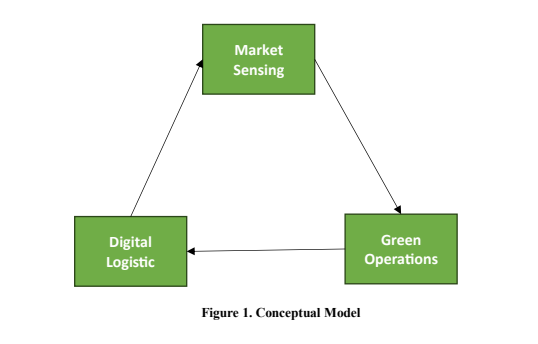
Viewing these capabilities as a triadic system emphasizes that their value emerges from coordinated development rather than isolated investments. Firms that develop one capability in the absence of the others may experience limited performance gains. The framework therefore highlights the importance of strategic coherence in capability development, reinforcing the notion that dynamic capabilities operate most effectively as integrated bundles. Although each capability plays a distinct role in the dynamic capability process, the three domains are deeply interdependent. Their relationships form a reinforcing loop rather than a linear progression:
Market sensing and Digital logistics: Insights into customer needs, competitive actions, and technological shifts guide digital investments that improve supply chain responsiveness and transparency.
Digital logistics and green operations: Digital systems enable firms to monitor environmental performance, optimize resource usage, and support the data driven execution of green initiatives.
Green operations and Market sensing: Sustainability transformations generate new learning that informs future sensing processes, particularly regarding eco-friendly market segments and stakeholder expectations.
These reciprocal relationships indicate that dynamic capabilities evolve through continual feedback loops. The triadic integration ensures that sustainability and digitalization are not isolated initiatives but embedded within a holistic capability system guided by market intelligence.
Business Performance Outcomes
The triadic framework contributes to superior business performance across three dimensions: Operational Performance: Digital logistics reduces lead times, improves accuracy, enhances visibility, and increases coordination efficiency. Combined with green operations, firms achieve resource efficiency, waste reduction, and optimized production processes.
Environmental Performance: Green operations directly reduce environmental impact through emissions control, waste minimization, and eco-efficient resource use. Digital logistics enhances environmental performance by providing real time environmental monitoring and optimization.
Financial and Competitive Performance: The synergy among market sensing, digital logistics, and green operations leads to enhanced adaptability, reduced costs, improved market responsiveness, stronger brand reputation, and long-term competitive advantage.
Digital
 Logistic
THEORETICAL PROPOSITIONS
Building on the triadic dynamic capabilities’ framework, this study advances a set of theoretically grounded propositions that articulate directional and testable relationships among market sensing, digital logistics, and green operations. Although the present study is conceptual in nature, the propositions are deliberately formulated to support future empirical testing using survey-based designs, longitudinal data, or comparative case studies. This approach enhances empirical readiness while preserving the theoretical purpose of the paper.
Market Sensing as a Driver of Digital Logistics Capability
Market sensing capabilities enable firms to interpret shifts in customer expectations, competitive behaviors, technological innovations, and regulatory changes. These insights directly inform decisions about digital investments, process redesign, and supply chain integration. When firms accurately sense opportunities related to emerging technologies or market needs for speed, transparency, and customization, they are more likely to invest in digital logistics systems that support data driven operations (Xue et al., 2025).
Market sensing reduces uncertainty when adopting digital tools and ensures that digital logistics initiatives align with strategic priorities. Firms that excel in sensing can better identify the digital technologies required to improve visibility, coordination, and responsiveness. Consequently, market sensing acts as an upstream capability that shapes the development of digital logistics capability.
Proposition 1: Market sensing capability positively influences the development and deployment of digital logistics capability.
Market Sensing as an Enabler of Green Operations
Environmental consciousness is increasingly shaped by shifting consumer expectations, regulatory pressures, and global sustainability trends (Xin et al., 2023). Market sensing allows firms to identify these emerging expectations early, anticipate future regulations, and understand how sustainability values influence purchasing behavior (Wang & Zhang, 2025). By interpreting these signals, firms can prioritize environmental initiatives and allocate resources toward green operations capability.
Market sensing also informs specific operational transformations, such as eco-design, waste reduction, energy efficiency measures, or circular economy practices. Firms that fail to sense sustainability-related shifts risk implementing green initiatives that are misaligned with stakeholder expectations or regulatory requirements. Thus, market sensing forms a critical foundation for sustainability driven transformation.
Proposition 2: Market sensing capability positively influences the development and effectiveness of green operations capability.
Digital Logistics as an Enabler of Green Operations
Digital logistics capability enhances firms’ ability to execute and monitor sustainability initiatives (Singh et al., 2025; Singh et al., 2020; Wang & Zhang, 2024). Through IoT sensors, real time data analytics, automation, and AI driven optimization, digital logistics provides the infrastructure necessary to measure emissions, track waste, monitor resource consumption, and identify operational inefficiencies. This digital visibility supports data driven environmental decision making and enables more effective deployment of green initiatives.
Furthermore, digital logistics systems allow firms to optimize transportation routes, reduce idle time, improve energy efficiency, and coordinate supply chain activities in eco-efficient ways (Pham et al., 2023; Ren & Mia, 2025; Sharma et al., 2025). These mechanisms represent fundamental pathways through which digital logistics capability strengthens green operations capability.
Proposition 3: Digital logistics capability positively influences the development, execution, and monitoring of green operations capability.
Complementarity Between Market Sensing and Digital Logistics
The interaction between market sensing and digital logistics creates a reinforcing capability loop. Market sensing identifies opportunities for digital investments, while digital logistics enhances the firm’s ability to collect market intelligence through real time data flows and analytics. This complementarity accelerates learning processes and supports more responsive capability development.
Digital logistics platforms often serve as rich information sources, generating insights that expand future sensing capabilities. In turn, sensing capabilities refine the strategic use of digital tools. This mutual reinforcement forms a capability bundle that enhances speed, flexibility, and responsiveness.
Proposition 4: Market sensing and digital logistics capabilities interact positively, reinforcing each other’s development and effectiveness.
Complementarity Between Digital Logistics and Green Operations
Digital logistics enhances the effectiveness of green operations by providing the monitoring systems, transparency mechanisms, and coordination tools required for sustainability initiatives. At the same time, green operations generate process improvements and environmental data that feed back into digital systems, strengthening their accuracy and relevance(Huy & Phuc, 2025; John et al., 2025; Le et al., 2022).
This reciprocal relationship ensures that sustainability goals are embedded into operational routines, while digital technologies support continuous environmental improvement. Firms with strong digital logistics capabilities are better positioned to implement and monitor green operations systematically.
Proposition 5: Digital logistics and green operations capabilities interact positively, enhancing the effectiveness of sustainability-oriented transformation.
Complementarity Between Market Sensing and Green Operations
Market sensing identifies evolving environmental expectations, while green operations embed these expectations into operational systems. Conversely, the outcomes of green operations such as eco- efficiency, reduced emissions, or compliance improvements provide feedback that informs future sensing processes (Afriyie et al., 2019; Brunner et al., 2024; Caliskan et al., 2021). Firms that integrate sustainability insights into sensing activities develop more accurate projections of environmental trends and stakeholder demands.
This reciprocal relationship fosters a sustainability-oriented culture and supports organizational learning related to environmental performance.
Proposition 6: Market sensing and green operations capabilities interact positively, reinforcing sustainability-oriented learning and decision making.
Triadic Integration and Business Performance
When market sensing, digital logistics, and green operations evolve in an integrated manner, firms develop dynamic capabilities bundle that significantly enhances performance across operational, environmental, and financial dimensions. Market sensing provides strategic direction, digital logistics enables rapid execution, and green operations embed long-term sustainability into organizational routines (Guo et al., 2020; Hofacker et al., 2020; Jarvis et al., 2003). The synergy among these capabilities supports higher responsiveness, efficiency, adaptability, and stakeholder value creation.
When market sensing, digital logistics, and green operations evolve in an integrated manner, firms develop a dynamic capability bundle that enhances performance across operational, environmental, and financial dimensions. Market sensing provides strategic direction, digital logistics enables rapid execution, and green operations embed sustainability into organizational routines. The synergy among these capabilities improves responsiveness, efficiency, adaptability, and stakeholder value creation, leading to superior business performance in dynamic and sustainability-driven environments.
Proposition 7: The integrated development of market sensing, digital logistics, and green operations capabilities positively influences superior business performance.
THEORETICAL CONTRIBUTIONS
This conceptual study offers several significant theoretical contributions to the fields of dynamic capabilities, supply chain management, digital transformation, sustainability, and strategic marketing. By integrating market sensing, digital logistics, and green operations into a unified dynamic capabilities framework, the paper advances existing knowledge in meaningful and original ways. The following subsections outline the major theoretical contributions. Table 2 shows the summary of theoretical propositions in the triadic dynamic capabilities’ framework.
Table 2. Summary of Theoretical Propositions
|
Proposition |
Description |
Underlying Logic |
|
P1 |
Market sensing positively influences the development and deployment of digital logistics capability. |
Firms that sense market shifts can make informed digital investment decisions and enhance digital readiness. |
|
P2 |
Market sensing positively influences the development and effectiveness of green operations capability. |
Awareness of environmental expectations guides sustainability priorities and resource allocation. |
|
P3 |
Digital logistics positively influences the execution and monitoring of green operations. |
Digital systems provide data and optimization tools needed for effective environmental performance. |
|
P4 |
Market sensing and digital logistics interact positively and reinforce each other’s development. |
Digital tools enhance intelligence collection; sensing informs digital strategy. |
|
P5 |
Digital logistics and green operations interact positively and enhance sustainability transformation. |
Real time visibility supports eco-efficiency and compliance monitoring. |
|
P6 |
Market sensing and green operations interact positively and encourage sustainability learning. |
Sustainability insights inform future sensing and strategic decisions. |
|
P7 |
Integrated development of all three capabilities leads to superior business performance. |
Triadic synergy enhances operational, environmental, and financial outcomes. |
Extending Dynamic Capabilities Theory to a Triadic Capability System
A major contribution of this paper is the extension of Dynamic Capabilities Theory (DCT) through the development of a triadic dynamic capability system that combines sensing, seizing, and transforming mechanisms in an integrated structure. While prior studies have typically examined these capabilities in isolation or as linear processes (Abu-Rumman et al., 2021; Awwad et al., 2022), this paper conceptualizes them as mutually reinforcing and interdependent. Market sensing (sensing), digital logistics (seizing), and green operations (transforming) are aligned with the core micro foundations of DCT, but more importantly, they are shown to interact through circular and complementary feedback loops.
The framework demonstrates that dynamic capabilities function not as discrete mechanisms, but as coordinated bundles that evolve together. This perspective contributes to DCT by illustrating that capability effectiveness depends on cross capability integration rather than independent development. This integrated interpretation provides a more realistic and holistic understanding of how contemporary firms adapt in digitally complex and sustainability driven markets.
Bridging Three Fragmented Research Streams
Another key theoretical contribution lies in bridging three research streams that have evolved largely independently: market sensing, digital logistics, and green operations. While each domain has substantial scholarly foundations, they are rarely conceptualized together within a single theoretical model. This fragmentation has limited the ability of researchers to understand capability interplay across marketing, supply chain, and sustainability domains(Ebrahimi & Mirbargkar, 2017).
By positioning these domains as interconnected dynamic capabilities, this paper provides a unifying perspective that highlights the complementary nature of market intelligence, digital transformation, and environmental sustainability. This contributes to resolving fragmentation in the literature and opens avenues for new multidisciplinary discussions and research collaborations. The model demonstrates that digital and green capabilities should not be viewed as separate initiatives, but rather as capability extensions guided by continuous market sensing.
Advancing Understanding of Digital Green Capability Complementarity
The third contribution relates to the intersection of digital transformation and green operations, a rapidly emerging yet theoretically underdeveloped domain. Existing scholarship has explored digitalization and sustainability separately, and only recently have researchers begun examining their interaction. This paper advances that emerging discourse by explaining how digital logistics enables and enhances green operations, and how environmental transformation feeds back into digital data environments (Pham et al., 2023).
The conceptual framework demonstrates that digital logistics provides accurate, real time data that is essential for monitoring environmental performance, optimizing resource use, and executing sustainability initiatives. Similarly, environmental practices contribute operational insights that refine digital processes. This reciprocal reinforcement reflects a form of capability complementarity that deepens theoretical understanding of digital green integration within the dynamic capabilities’ domain.
Positioning Market Sensing as the Strategic Catalyst for Digital and Green Transformations
A fourth theoretical contribution is the recognition of market sensing as the strategic foundation that catalyzes both digital transformation and environmental capability development. While market sensing is well established in the marketing literature, its role as a driver of digital and green operational transformation has received limited conceptual attention. This paper extends the scope of market sensing by demonstrating how its outputs guide digital investments, sustainability commitments, and long-term strategic alignment.
By placing market sensing at the center of capability evolution, the framework reinforces the importance of customer intelligence, competitive monitoring, and environmental scanning within the dynamic capability process. This deepens theoretical understanding of how firms identify, prioritize, and justify capability development in response to complex and uncertain environments.
Introducing a Holistic Perspective on Business Performance Outcomes
This paper also contributes to the literature by clarifying how dynamic capability bundles influence business performance across multiple dimensions: operational, environmental, and financial. While prior research often examines performance outcomes separately, the proposed framework explains how triadic capability integration strengthens performance holistically. The paper argues that performance enhancement is most significant when capabilities co-evolve and reinforce one another.
This contributes to theory by positioning performance as a multilevel outcome of integrated capability systems rather than isolated capability effects. It also enriches discussions on strategic alignment, value creation, and long-term competitive advantage within DCT.
Setting an Agenda for Cross Domain Capability Research
Finally, the study establishes a strong foundation for future cross domain research by proposing a series of theoretical propositions that can guide empirical testing. These propositions invite scholars to examine relationships that have been discussed conceptually but rarely studied empirically, such as:
-
The role of market sensing in driving digital logistics capability
-
The contribution of digital logistics to environmental transformation
-
The synergistic effects of triadic capability bundles
-
The multi dimensional pathways to business performance
By formalizing these propositions, the paper encourages measurement, operationalization, and empirical exploration of triadic dynamic capability configurations. This offers fertile ground for future research in operations, strategy, marketing, sustainability, and digital transformation.
Taken together, these contributions position the study at the intersection of strategic management, supply chain management, and sustainability research. By offering an integrative and theory-driven perspective, the paper supports ongoing scholarly efforts to move beyond fragmented explanations toward more holistic models of organizational adaptation in digitally enabled and sustainability-oriented markets.
MANAGERIAL AND PRACTICAL IMPLICATIONS
Developing a Market Sensing Culture for Strategic Alignment
Managers must recognize that digital and green transformation efforts are most effective when grounded in robust market sensing capabilities. Establishing a market sensing culture requires firms to implement continuous environmental scanning routines, strengthen cross functional communication, and integrate analytics driven insight systems. When market intelligence flows freely across marketing, operations, supply chain, and sustainability units, organizations gain a comprehensive understanding of customer preferences, regulatory developments, and technological shifts. This alignment ensures that investments in digital logistics and sustainability initiatives are strategically informed rather than reactive, thereby enhancing the coherence and long-term effectiveness of capability development.
Prioritizing Digital Logistics as the Operational Backbone
Digital logistics should be viewed as the operational foundation that enables organizations to respond quickly and accurately to market and environmental demands. Managers can enhance operational performance by investing in technologies such as real time visibility platforms, predictive analytics, process automation, and integrated data dashboards. These technologies increase transparency across the supply chain, strengthen coordination with partners, and improve decision making speed and precision. As firms adopt digital logistics systems, they enhance their ability to translate market insights into operational realities, facilitating greater responsiveness, efficiency, and strategic agility.
Embedding Sustainability into Core Operational Routines
Embedding sustainability into everyday operational routines requires managers to treat green operations as a strategic priority rather than an auxiliary compliance activity. Transforming operations toward sustainability involves redesigning production processes, optimizing resource usage, and adopting environmentally responsible practices such as waste minimization, eco-efficient design, and energy reduction. Managers should also encourage sustainability-oriented innovation within their teams and foster collaboration with suppliers that share environmental values. When sustainability becomes integrated into core workflows and performance metrics, firms strengthen their environmental reputation, reduce long-term ecological risks, and achieve operational cost savings.
Enhancing Cross Functional Integration and Capability Orchestration
The triadic framework underscores that market sensing, digital logistics, and green operations span multiple organizational functions and require collective orchestration. For capability integration to be effective, managers must cultivate mechanisms that support shared decision making and cross departmental alignment. This includes encouraging collaboration between marketing, IT, supply chain, operations, and sustainability units, as well as aligning strategic priorities and resource allocation practices across these areas. Strengthening cross functional integration ensures that insights from market sensing are translated into appropriate digital investments and sustainability initiatives, thereby enhancing the coherence and impact of capability development.
paste it exactly where? Managers may operationalize the proposed framework by assessing capability maturity across sensing, digital execution, and sustainability transformation. For example, firms can evaluate market sensing maturity through analytics integration and cross-functional intelligence sharing, digital logistics maturity through real-time visibility and automation adoption, and green operations maturity through emissions tracking and eco-efficiency metrics. Aligning investment decisions across these domains enables firms to avoid fragmented initiatives and instead build coherent digital–green capability portfolios.
Leveraging Digital Tools to Support Environmental Objectives
Digital technologies serve an essential role in enabling firms to achieve environmental objectives. Managers should explore how digital logistics tools can support the monitoring and execution of green operations. Using real time data from IoT sensors, AI driven optimization models, and blockchain-based traceability systems, firms can improve their understanding of emissions patterns, energy consumption, waste generation, and operational inefficiencies. As environmental performance becomes increasingly measurable and visible, managers can make more informed decisions and implement sustainability strategies with greater precision. This integration of digital and green initiatives strengthens both ecological and operational performance.
Designing Investment Strategies for Digital Green Synergy
Resource allocation decisions must reflect the growing importance of initiatives that offer simultaneous digital and environmental benefits. Managers can optimize long-term competitive positioning by prioritizing investments in technologies that enhance transparency, sustainability measurement, and operational flexibility. By focusing on initiatives that deliver dual value improving both digital readiness and environmental outcomes firms avoid fragmented investments and instead build cohesive capability portfolios. Structuring investment strategies around digital green synergies supports more effective capability development and ensures alignment with regulatory expectations and market demands.
Strengthening Organizational Learning and Knowledge Capabilities
Dynamic capabilities evolve through sustained learning, and managers must cultivate structures that support continuous improvement across sensing, digitalization, and sustainability domains. Strengthening organizational learning involves implementing feedback systems that capture real time performance data, conducting systematic reviews of digital and green initiatives, and offering training programs that enhance digital literacy and environmental awareness. Encouraging experimentation with new technologies and sustainability practices promotes knowledge accumulation and adaptability. Over time, these learning processes support the evolution of more sophisticated dynamic capabilities and enhance the firm’s ability to navigate environmental and technological turbulence.
Building Long Term Competitive Advantage Through Integrated Capabilities
The triadic integration of market sensing, digital logistics, and green operations provides firms with a strategic configuration that strengthens long term competitive advantage. By developing capabilities that enhance responsiveness, operational efficiency, sustainability performance, and customer trust, managers can position their organizations to thrive in increasingly complex and uncertain markets. The integrated capability system enables firms to balance current performance needs with future oriented transformations, aligning operational excellence with environmental stewardship and market intelligence. In doing so, firms build resilience and competitiveness that extend beyond transactional efficiencies toward enduring strategic differentiation.
As a conceptual study, this paper does not provide empirical validation of the proposed framework. Instead, it aims to advance theory by clarifying capability relationships and proposing testable propositions. Future research may empirically examine the framework using multi-industry survey data, longitudinal designs, or in-depth case studies. Scholars may also investigate boundary conditions such as environmental dynamism, firm size, institutional context, and technological turbulence. Empirical validation would further strengthen understanding of how triadic dynamic capability configurations influence business performance.
CONCLUSION
The accelerating pressures of digital transformation, volatile market conditions, and global sustainability imperatives demand that organizations develop capabilities that extend beyond traditional operational routines. This conceptual paper has argued that market sensing, digital logistics, and green operations form an integrated triadic system of dynamic capabilities that enables firms to sense emerging opportunities, seize them through digitally enabled operations, and transform their processes toward environmental sustainability and long-term competitiveness. Drawing on the microfoundations of Dynamic Capabilities Theory (DCT), the study has positioned these three capability domains not as isolated constructs but as mutually reinforcing mechanisms that collectively enhance business performance (Awwad et al., 2022). The framework developed in this paper demonstrates that market sensing serves as the strategic foundation by identifying shifts in customer expectations, technological trajectories, and environmental pressures. Digital logistics functions as the operational backbone that translates these insights into coordinated, data driven actions, while green operations embody the transformative efforts required to embed sustainability into core organizational routines. Through their reciprocal interactions, these capabilities evolve into a capability bundle that elevates operational efficiency, environmental performance, and financial outcomes. This triadic integration offers a more comprehensive understanding of how firms adapt and thrive in dynamic environments, addressing theoretical gaps in the fragmented literatures on sensing, digitalization, and sustainability.
The theoretical propositions articulated in this study highlight the need to examine the interplay among market sensing, digital logistics, and green operations empirically. Future research should explore how these capabilities manifest across industries, how they can be measured and operationalized, and how their interactions shape performance in diverse contexts. Such empirical exploration would deepen understanding of capability configurations and provide further validation of the conceptual model presented here.
From a broader perspective, the triadic framework underscores the importance of strategic coherence in capability development. Firms that integrate sensing, seizing, and transforming mechanisms in a coordinated manner are better equipped to navigate uncertainty, respond to evolving stakeholder expectations, and sustain competitive advantage. As markets become increasingly digitized and sustainability becomes a non-negotiable strategic requirement, the integration of market sensing, digital logistics, and green operations is likely to become a defining characteristic of high performing organizations.
In sum, this paper contributes to the advancement of Dynamic Capabilities Theory and enriches the discourse on digital and sustainable transformation by conceptualizing a unified capability system that integrates market intelligence, digital infrastructure, and environmental transformation. By offering a holistic perspective on capability development, the study provides a foundation for future research and practical decision making, helping organizations build resilience and secure long-term strategic success in an era of rapid change.
ACKNOWLEDGEMENTS:
The author would like to acknowledge the individuals, institutions, and organizations that provided support, guidance, or assistance during the development of this research.
FUNDING SOURCES:
The author received no financial support for the research, authorship, and/or publication of this article.
CONFLICT OF INTEREST:
The author declares no conflict of interest.
REFERENCES
-
Abu-Rumman, A., Al Shraah, A., Al-Madi, F., & Alfalah, T. (2021). Entrepreneurial networks, entrepreneurial orientation, and performance of small and medium enterprises: are dynamic capabilities the missing link? Journal of Innovation and Entrepreneurship , 10 (1), 29.
-
Afriyie, S., Du, J., & Ibn Musah, A.-A. (2019). Innovation and marketing performance of SME in an emerging economy: the moderating effect of transformational leadership. Journal of Global , 9 (1), 40.
-
Ahmadimousaabad, A., Bajuri, N., Jahanzeb, A., Karami, M., & Rehman, S. (2013). Trade-off theory, pecking order theory and market timing theory: a comprehensive review of capital structure theories. International Journal of Management and Commerce Innovations , 1 (1), 11-18.
-
Ameer, M. S. (2018). Total quality management practices and supply chain management: understanding linkages from the logistics sector of Pakistan. SEISENSE Journal of Management , 1 (4), 22-28.
-
Anjum, M. J., Ali, S. M., Sadiq, M., Karami, M., & Khan, S. (2012). Exploring the nexus: management practices, innovation and firm performance. World Applied Sciences Journal , 19 (6), 785-794.
-
Awwad, A. S., Ababneh, O. M. A., & Karasneh, M. (2022). The mediating impact of IT capabilities on the association between dynamic capabilities and organizational agility: the case of the Jordanian IT sector. Global Journal of Flexible Systems Management , 23 (3), 315-330.
-
Brunner, D., Legat, C., & Seebacher, U. (2024). Towards Next Generation Data-Driven Management: Leveraging Predictive Swarm Intelligence to Reason and Predict Market Dynamics. In Collective Intelligence (pp. 152-203). CRC Press.
-
Caliskan, A., Özkan Özen, Y. D., & Ozturkoglu, Y. (2021). Digital transformation of traditional marketing business model in new industry era. Journal of Enterprise Information Management , 34 (4), 1252-1273.
-
Ebrahimi, P., & Mirbargkar, S. M. (2017). Green entrepreneurship and green innovation for SME development in market turbulence. Eurasian Business Review , 7 (2), 203-228.
-
Ghasemi, R., Azmi Mohamad, N., Karami, M., Hafiz Bajuri, N., & Asgharizade, E. (2016). The mediating effect of management accounting system on the relationship between competition and managerial performance. International Journal of Accounting and Information Management , 24 (3), 272-295.
-
Ghasemi, R., Habibi, H. R., Ghasemlo, M., & Karami, M. (2019). The effectiveness of management accounting systems: evidence from financial organizations in Iran. Journal of , 9 (2), 182-207.
-
Guo, H., Wang, C., Su, Z., & Wang, D. (2020). Technology push or market pull? Strategic orientation in business model design and digital start‐up performance. Journal of product , 37 (4), 352-372.
-
Hofacker, C., Golgeci, I., Pillai, K. G., & Gligor, D. M. (2020). Digital marketing and business-to- business relationships: a close look at the interface and a roadmap for the future. In (Vol. 54, pp. 1161-1179): Emerald Publishing Limited.
-
Huy, P. Q., & Phuc, V. K. (2025). Insight into how social media platforms in building relational social commerce capability for green entrepreneurial innovation. Future Business Journal , 11 (1), 58.
-
Jarvis, C. B., MacKenzie, S. B., & Podsakoff, P. M. (2003). A critical review of construct indicators and measurement model misspecification in marketing and consumer research. Journal of , 30 (2), 199-218.
-
John, H. B., Agrawal, M., Nema, P., Hasan, A., Rakhra, I. K., & Singh, A. (2025). Green growth: a bibliometric analysis of digital innovation and Sustainable Development Goals (SDGs). Journal , 14 (1), 15.
-
Karami, M. (2025). DIGITAL ENTREPRENEURSHIP AND CROSS BORDER TRADE PERFORMANCE IN EMERGING ECONOMIES: THE MEDIATING ROLES OF INNOVATION CAPABILITY AND INSTITUTIONAL SUPPORT. TMP Universal Journal of
Law, Business, and Management, 1(2).
-
Karami, M., Far, S. M., Abdollahian, E., & Khan, S. U. R. (2013). Online shopping factors behavior effect on E-CRM capabilities in Malaysia. World Journal of Management and Behavioral , 1 (2), 44-52.
-
Karami, M., Ghasemi, R., Khan, S., & Hamid, A. (2014). Market orientation and supply chain innovation relationship: Conceptual framework model. Middle-East Journal of Scientific , 21 (9), 1526-1532.
-
Karami, M., Hozhabri, A. A., Asgharizadeh, E., Nor, K. M., Khan, S.-U.-R., & Gashti, M. A. H. (2014). Elements affect online repurchase intentions of Malaysia's online shoppers. 8th International Conference on e-Commerce in Developing Countries: With Focus on e-Trust,
-
Karami, M., Hozhabri, A. A., Ghasemi, R., & Bakar, A. H. A. (2016). Market orientation and performance relationship with respect to the manufacturing industry. International Journal of , 8 (4), 348-370.
-
Le, T. T., Vo, X. V., & Venkatesh, V. (2022). Role of green innovation and supply chain management in driving sustainable corporate performance. Journal of Cleaner Production , 374 , 133875.
-
Mobarakabadi, H., & Karami, M. (2014). Investigation of relationship among the organizational culture and creativity. Research Journal of Applied Sciences, Engineering and Technology , 7 (19), 4069-4071.
-
Mobarakabadi, H., Karami, M., Far, S. M., & Yarkarami, K. (2013). Influence of online shopping behavior factors on e-satisfaction of customer. Sains Humanika , 64 (3).
-
Mohamad, N. A., Karami, M., Bajuri, N. H., & Asgharizade, E. (2015). The relationship among strategy, competition and management accounting systems on organizational performance. European Online Journal of Natural and Social Sciences , 4 (3), pp. 565-581.
-
Mohammadi, M. A. D., Khan, M. N. A. A., Karami, M., & Sadatifar, S. R. (2016). Perceived Organizational Support and Perceived Organizational Performance Mediated by Corporate Entrepreneurship. Sains Humanika , 8 (1).
-
Pham, H. T., Pham, T., Truong Quang, H., & Dang, C. N. (2023). Impact of transformational leadership on green learning and green innovation in construction supply chains. Engineering, , 30 (5), 1883-1901.
-
Ren, X., & Mia, M. A. (2025). The determinants of green innovations in manufacturing industries: a systematic literature review. Future Business Journal , 11 (1), 42.
-
Sharma, D., Virmani, N., Mangla, S. K., Kumar, P., & Mohanty, R. (2025). Leveraging green innovation, organizational learning, and institutional pressure to enhance supply chain flexibility: A petroleum refinery perspective using SAP-LAP and e-IRP. Global Journal of Flexible Systems , 1-27.
-
Singh, K., Chaudhuri, R., & Chatterjee, S. (2025). Assessing the impact of digital transformation on green supply chain for achieving carbon neutrality and accelerating circular economy initiatives. Computers & Industrial Engineering , 201 , 110943.
-
Singh, S. K., Del Giudice, M., Chierici, R., & Graziano, D. (2020). Green innovation and environmental performance: The role of green transformational leadership and green human resource management. Technological Forecasting and Social Change , 150 , 119762.
-
Wang, S., & Zhang, H. (2024). Inter-organizational cooperation in digital green supply chains: A catalyst for eco-innovations and sustainable business practices. Journal of Cleaner Production , 472 , 143383.
-
Wang, S., & Zhang, H. (2025). Generative artificial intelligence and internationalization green innovation: Roles of supply chain innovations and AI regulation for SMEs. Technology in Society , 82 , 102898.
-
Xin, X., Miao, X., & Cui, R. (2023). Enhancing sustainable development: Innovation ecosystem coopetition, environmental resource orchestration, and disruptive green innovation. Business , 32 (4), 1388-1402.
-
Xue, C., Wang, J., & Torres de Oliveira, R. (2025). Digital Capability and Radical Green Innovation: The Role of Organizational Resilience and Environmental Dynamism. Corporate .
-
Zhou, Q., Wang, S., Ma, X., & Xu, W. (2024). Digital technologies and corporate green innovation: opening the “black box” of resource orchestration mechanisms. Sustainability Accounting, , 15 (4), 884-912.